Aspidochelone
Travelers in Medieval Bestiary speak of Aspidochelone, a fae of sea.
Aspidochelone Lore & Origins
Aspidochelone Encounter Protocols & Field Notes
- A ring of kelp and driftwood outlining a false beach, seabirds oddly tame and congregating in a precise band, and sand that gives way like a sponge when tested.
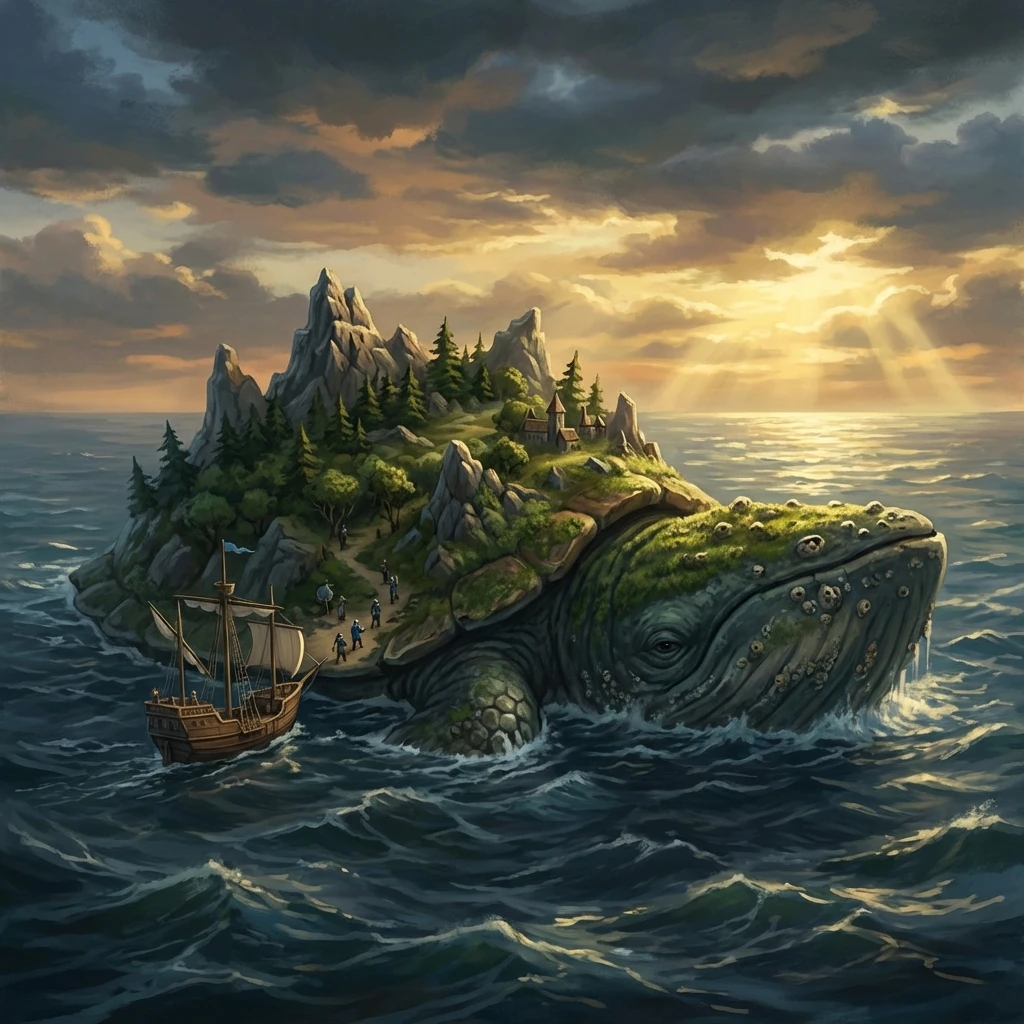
- mischief: Aspidochelone lures the curious by masquerading as safe land: sailors anchor, light fires, and make camp while the beast lets them believe shore is shore. When enough weight or recklessness accumulates, it will sink to sea, carrying tents and vessels into deep water or scattering them on distant shoals. Its trick is not gratuitously cruel but follows a slow, inevitable logic—temptation, patience, and a final, indifferent submergence.
- interaction: Approach with ritual caution. Do not beach or light large fires. Test any new "shore" by tossing heavy, marked objects ashore and watching whether they remain settled after repeated tidal checks; observe bird behavior from distance. If contact is necessary, speak softly, present neutral offerings, and avoid leaving heavy or permanent structures.
- offering: Small maritime tokens: a carved piece of driftwood, salted fish laid on the waterline, or a quiet chant/sea-song to announce your presence—acts that show respect rather than possession.
Aspidochelone Abilities & Powers
- False-Island AmbushThe Aspidochelone lets seaweed, sand and even standing trees grow on its shell so sailors mistake it for an island, then suddenly dives to drown and crush everything aboard.
- Barnacle CamouflageThick barnacles, turf and salt-tolerant plants fuse to its carapace, concealing breathing slits and masking oceanic scents from passing ships.
- Titanic PlungeWhen threatened or baited, it executes a cataclysmic, controlled submerge that generates maelstrom-like currents and snaps anchored vessels free.
Weaknesses & How to Defeat the Aspidochelone
- Barnacle Rift TargetingHeavy, driven harpoons or iron spikes aimed into the seams beneath barnacle clusters can penetrate softer dermal layers and cause fatal bleeding.
- Tidal Anchor TrapSecuring multiple heavy anchors to exposed shell seams and releasing them at peak tide can shear muscle attachments and impede its diving ability.
Related Monsters


Who Would Win?
Think you know everything about the Aspidochelone? Test your knowledge in our Battle Matchups simulator to see how it fares against other legendary creatures.
Recommended Reading
Expand your library with these top-rated books on global mythology & folklore

Mythology: Timeless Tales of Gods and Heroes
By Edith HamiltonThe absolute standard for Greek, Roman, and Norse mythology studies. Excellent source for understanding gods and classic monsters.

The Hero with a Thousand Faces
By Joseph CampbellExplores the monomyth (the Hero's Journey) across global folklore and mythic archetypes, outlining why these stories persist.
Affiliate Disclosure: As an Amazon Associate, we earn from qualifying purchases when you buy recommended books through our links.
Want to discover something else?
Fall down the mythic rabbit hole. Click below to discover a completely random creature from our archives.