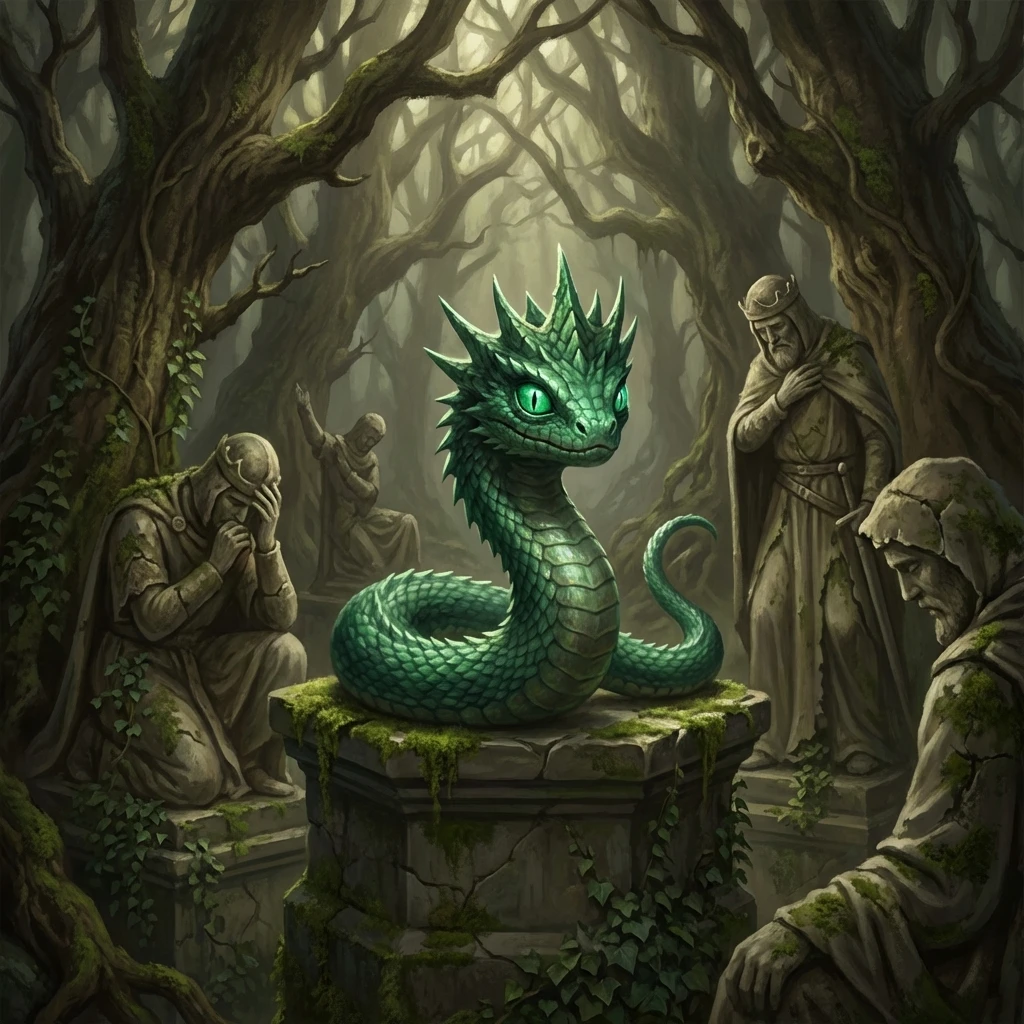
Basilisk
Native to Medieval European, Basilisk is a monster beast of serpent.
See How Basilisk Appears in Modern Pop Culture
Featured in Harry Potter and the Chamber of Secrets, The Witcher 3: Wild Hunt, Dark Souls Series, and more.
Basilisk Lore & Origins
Basilisk Encounter Protocols & Field Notes
- A ring of dead or glassy vegetation and a faint scorch-pattern on stones; small animals found motionless with a glasslike sheen are the surest sign.
- avoidance: Avoid direct sightlines—do not look into the creature's eyes. Travel with reflective surfaces covered, do not travel alone at dawn or dusk, and skirt sunlit clearings where heat pools.
- defense: Use indirect observation (mirrors, polished metal, camera lenses) to maintain situational awareness; keep cover and break line of sight if detected. Folklore-tested measures: loud disturbances to force retreat, ranged tools to disable from cover, and the use of a rooster's crow or a sudden bright reflection to disorient it long enough to escape. If forced into conflict, target mobility and vision (nets, entangling lines, blinding smoke) rather than a frontal charge.
- offering: Small polished mirrors or bright, flashing objects are sometimes left at perimeter stones—more often to distract than to appease.
Basilisk Abilities & Powers
- Petrifying GazeDirect eye contact causes instant paralysis and the gradual calcification of living tissue into stone.
- Stone-Mist ExhalationA corrosive, mineral-laden breath that calcifies plants and weakens flesh into brittle, stone-like material on contact.
Weaknesses & How to Defeat the Basilisk
- Weasel PredationA weasel (or its scent) is fabled to be lethal to the basilisk or will relentlessly attack and kill it.
- Rooster's CrowThe crowing of a rooster is traditionally said to repel or fatally disorient the basilisk, breaking its lethal influence.
- Reflected SightSeeing its own reflection in still water or a mirror can disrupt or reverse its gaze, often causing self-petrification or incapacitation.
Related Monsters


Deepen Your Study of the Basilisk
Access authentic 18th-century explorer field notes, full vulnerability dossiers, and encounter protocols across 405 entities in the complete collector's digital tome.
Who Would Win?
Think you know everything about the Basilisk? Test your knowledge in our Battle Matchups simulator to see how it fares against other legendary creatures.
Recommended Reading
Expand your library with these top-rated books on global mythology & folklore

Mythology: Timeless Tales of Gods and Heroes
By Edith HamiltonThe absolute standard for Greek, Roman, and Norse mythology studies. Excellent source for understanding gods and classic monsters.

The Hero with a Thousand Faces
By Joseph CampbellExplores the monomyth (the Hero's Journey) across global folklore and mythic archetypes, outlining why these stories persist.
Affiliate Disclosure: As an Amazon Associate, we earn from qualifying purchases when you buy recommended books through our links.
Want to discover something else?
Fall down the mythic rabbit hole. Click below to discover a completely random creature from our archives.