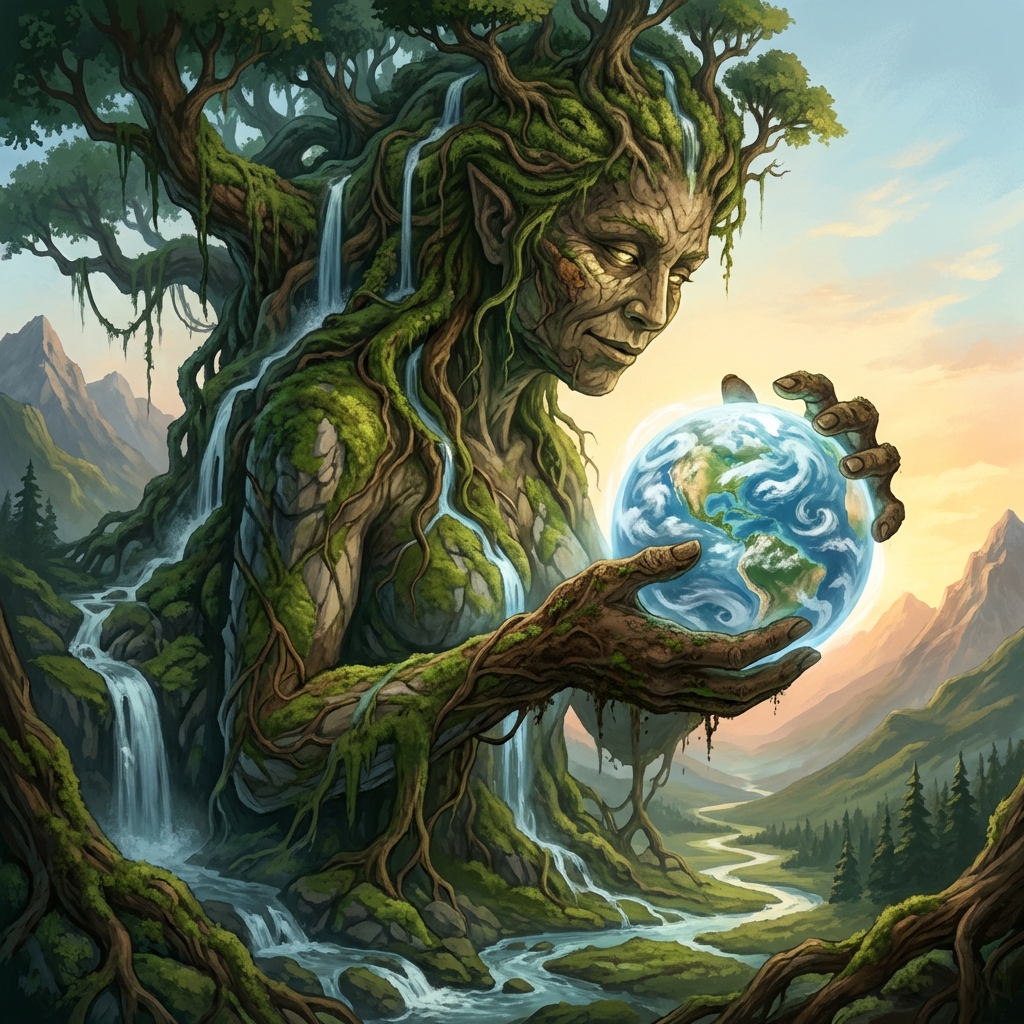
Gaia
Native to Greek, Gaia is a deity of earth.
Gaia Lore & Origins
Gaia Encounter Protocols & Field Notes
- A sudden, concentrated flourishing where nothing should grow — rings of mushrooms, a cluster of newborn saplings, or an inexplicable patch of wildflowers over disturbed earth.
- taboo: Do not willfully strip or scatter the earth: do not uproot standing stones, plunder burial mounds, or alter natural springs without cause. Avoid needless excavation of sacred groves and do not claim a place as personal property; hubris toward the land invites imbalance.
- reverence: Offerings and respect are given by tending rather than taking: plant seeds, mend broken hedgerows, restore soil, return gathered stones to their cairns, sing to springs, and observe seasonal rites. Communal stewardship, promises to care for a place, and acts that restore fertility please her more than tribute.
- offering: Seeds, water from a natural source, a handful of returned soil, or a carved stone token accompanied by a promise to protect the place.
Gaia Abilities & Powers
- Earthbirth — Spawn of GiantsGestates and births monstrous champions directly from the soil—most famously producing the Giants and Typhon to challenge the sky and the Olympians.
- Seismic DominionCommands convulsions, fissures and continental upheaval by will, turning the ground beneath foes into chasms or quicksand in an instant.
- Rootbind EntombmentSummons ancestral roots and bedrock to ensnare, imprison or petrify adversaries, trapping gods and mortals alike beneath the earth.
Weaknesses & How to Defeat the Gaia
- Olympian HegemonyHer schemes and direct assaults are bluntly countered by the celestial order—Zeus's lightning and the Olympian magistracy historically curtailed her most potent plans.
- Tethered to TerraHer power is vastly stronger where native earth is present; removed from soil (deep sea, void or distant sky realms) her agency is sharply reduced.
- Reliance on ProgenyMany of her grand designs depend on offspring (Titans, Giants, Typhon); their defeat or betrayal unravels plots she cannot always finish alone.
Related Monsters
Who Would Win?
Think you know everything about the Gaia? Test your knowledge in our Battle Matchups simulator to see how it fares against other legendary creatures.
Recommended Reading
Expand your library with these top-rated books on global mythology & folklore

Mythology: Timeless Tales of Gods and Heroes
By Edith HamiltonThe absolute standard for Greek, Roman, and Norse mythology studies. Excellent source for understanding gods and classic monsters.

The Hero with a Thousand Faces
By Joseph CampbellExplores the monomyth (the Hero's Journey) across global folklore and mythic archetypes, outlining why these stories persist.
Affiliate Disclosure: As an Amazon Associate, we earn from qualifying purchases when you buy recommended books through our links.
Want to discover something else?
Fall down the mythic rabbit hole. Click below to discover a completely random creature from our archives.