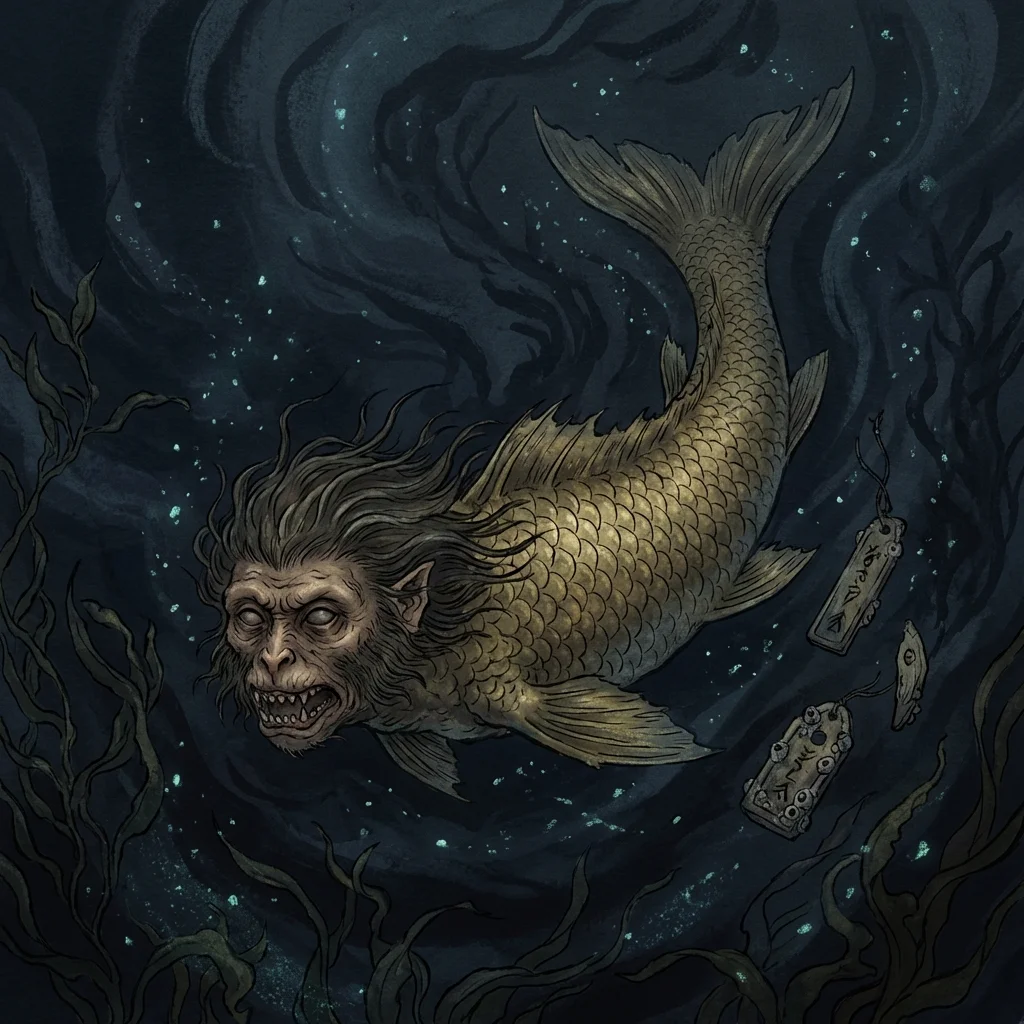
Ningyo
Ningyo: A cryptid of Japanese embodying merfolk.
Ningyo Lore & Origins
Ningyo Encounter Protocols & Field Notes
- Scattered, coin-sized iridescent scales caught in tide-foam or a solitary, bell-like cry at first light.
- behavior: Primarily solitary and crepuscular. Ningyo patrol rocky shores and inshore currents, surfacing at dawn or dusk. It inspects nets and floating debris with careful motions, and tradition records storms or bad luck when one is forcibly taken from the sea. It is not aggressively predatory; its actions read as defensive and investigative.
- interaction: Observe from a distance. Do not attempt to net, drag, or restrain. If one is accidentally entangled, cut lines and return it to the water promptly; aggressive handling is recorded in accounts as inviting sudden squalls or misfortune. Offer clear seawater and a small portion of fresh fish if you must engage — then step back. Record appearance and behavior rather than capturing.
- offering: A small bowl of clear seawater and a single piece of fresh fish or a strand of kelp set on drifting foam.
Ningyo Abilities & Powers
- Flesh of Long YearsConsuming even a small portion of ningyo flesh grants drastically extended lifespan to the eater while binding a lingering misfortune to their descendants.
- Wail of TempestThe ningyo's cry summons violent storms and roiling seas that batter ships and unsettle coastal communities.
- Cursed BoonIf captured or displayed, a ningyo can bestow an immediate bounty or protection that inverts into tragic calamity for the captor's household over time.
Weaknesses & How to Defeat the Ningyo
- DesiccationProlonged removal from seawater rapidly desiccates its skin and drains its magic, leaving it lethargic or dying.
- Salt PurificationShinto salt purification wounds its scales and disrupts its charms, forcing retreat or weakening its cries.
- Sacred SutrasChanting Buddhist sutras or binding with consecrated rope (shimenawa) suppresses its spirit and prevents manifestation of its more dangerous powers.
Related Monsters



Who Would Win?
Think you know everything about the Ningyo? Test your knowledge in our Battle Matchups simulator to see how it fares against other legendary creatures.
Recommended Reading
Expand your library with these top-rated books on global mythology & folklore

Mythology: Timeless Tales of Gods and Heroes
By Edith HamiltonThe absolute standard for Greek, Roman, and Norse mythology studies. Excellent source for understanding gods and classic monsters.

The Hero with a Thousand Faces
By Joseph CampbellExplores the monomyth (the Hero's Journey) across global folklore and mythic archetypes, outlining why these stories persist.
Affiliate Disclosure: As an Amazon Associate, we earn from qualifying purchases when you buy recommended books through our links.
Want to discover something else?
Fall down the mythic rabbit hole. Click below to discover a completely random creature from our archives.