A Day in the Life: The Nian
The Deep Slumber
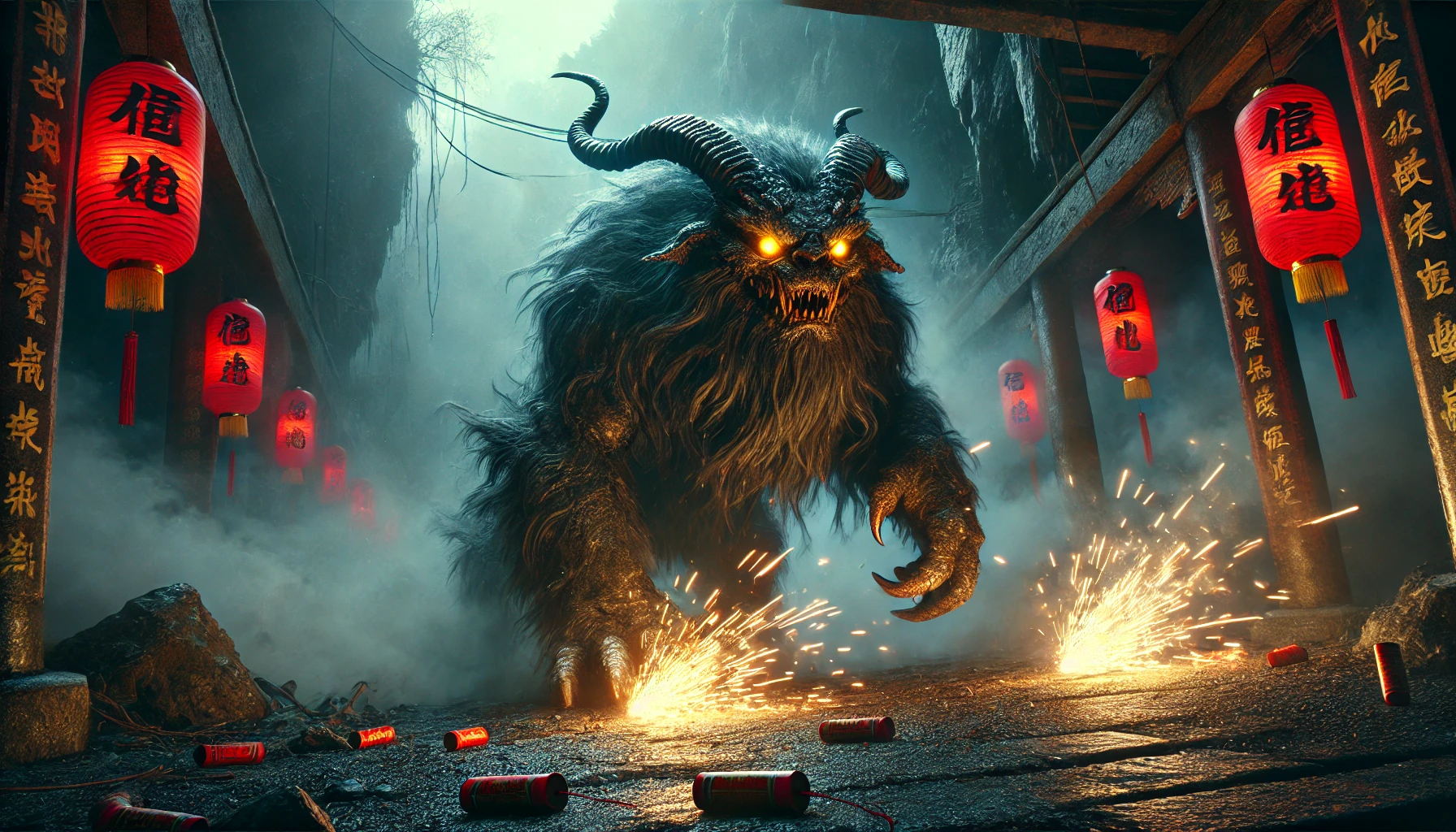
High in the mountains, far above the cloud line where the air is thin and cold, the Nian sleeps. He sleeps not for hours, but for seasons. Summer rain, autumn wind, and winter snow pass over his stone-like hide, and he remains immobile, indistinguishable from the rocky crags. He is a creature of ancient geometry—a lion’s body scaled like a fish, crowned with the horns of a dragon, and armed with serrated daggers for teeth.
But eventually, a sensation wakes him. It is not a sound or a changing light; it is emptiness. A void in his stomach that demands to be filled. His golden, cat-like eyes snap open, and he sniffs the air. It is cold. The cycle has turned. The hunger is back. It is time.
The Descent
He descends the mountain path, sticking to the shadows that pool in the ravines. He hates the world of men—it is too bright, too loud, and filled with smells that offend his ancient senses. But it is where the food is. He remembers the taste of livestock, the soft texture of children, the ease of the hunt.
Reaching the valley floor, the village lies ahead. He pauses, his massive paws sinking into the snow. Something is wrong.
The Color
The village usually disappears at night, a cluster of dark wood and dark tiles blending into the landscape. Tonight, it is bleeding. Everything is red. Red lanterns hang from every eave; red paper scrolls cover the doors; red clothes hang on the lines.
The Nian recoils, hissing. The color physically hurts his eyes. It is the color of fire, the color of aggressive, burning blood. It triggers a primal panic deep in his lizard brain, a warning signal that screams DANGER. He growls, fighting the urge to run. The hunger is stronger than the fear. He pushes forward, creeping toward a house where a lantern has faded, hoping to find a gap in the crimson armor.
The Noise
He is ten feet from the door, muscles coiled to spring. Suddenly, a child runs out. He sees the beast, but instead of screaming, he throws something on the ground.
CRACK!
A firecracker explodes. The sound is not just loud; it is sharp, piercing the Nian’s sensitive ears like a needle. BANG! POP! CRACK-CRACK-CRACK! A string of explosions follows, filling the air with the acrid smell of gunpowder and sulfur. The Nian roars in pain, shaking his massive head. He hates this popping noise; it sounds like the mountain cracking, like the gods themselves are angry.
The Fire
He retreats, trying the west side of the village, seeking silence. But a man stands guard there, holding a torch. He sees the Nian and waves the fire aggressively. "Go!" the man shouts. "Go back to the mountain!"
The Nian hisses, watching the flames dance. He remembers the ancient pain of being burned, a memory etched into his genetic code. He lunges, snapping his jaws, but the man throws the torch. It lands near the Nian’s paw, sputtering in the snow. Red. Noise. Fire. It is too much. The food is not worth this sensory torture. The village has become a fortress of overload.
The Retreat
He turns tail and runs, scrambling back up the rocky path. The sounds of celebration follow him—drums, gongs, and more firecrackers echoing off the canyon walls. They are mocking him.
Reaching his high cave, the air is thin and cold and silent once more. He collapses, his hunger unsatisfied. He will have to hunt mountain goats again—stringy, tough meat that offers no pleasure. Curling up, he closes his eyes, trying to shut out the memory of the red light.
He hates the New Year. He will sleep. He will wait for them to forget, for the red paper to fade and the lanterns to break. Next year. Next year, he tells himself, he will eat them all.