Chinese Dragon: The Celestial Serpent
The God of Rain
The Western dragon is a beast of fire and greed, a monster hiding in a cave. The Eastern dragon (Long) is the opposite. It is a creature of water and sky, a divine administrator of the cosmos.
It does not hoard gold. It hoards wisdom. It does not burn villages. It brings the rain that feeds the rice paddies. To see a Long is not a combat encounter. It is a brush with divinity. They are the Masters of Weather, swimming through the clouds as easily as a carp swims through a pond.
The Anatomy of Nine
The physiology of the Long is a chimera of the most powerful traits in the animal kingdom. Ancient texts describe the "Nine Resemblances":
- Head: A camel (majesty).
- Horns: A stag (longevity).
- Eyes: A hare (vision).
- Body: A snake (flexibility).
- Scales: A carp (resilience).
- Claws: An eagle (predatory grasp).
- Paws: A tiger (power).
Crucially, the Long has no wings. It flies through mystical buoyancy, riding the magnetic currents of the earth and sky (the Chi).
The Five-Clawed Sovereign
Hierarchy is essential to the species.
- Three Claws: Common dragons found in Japan.
- Four Claws: Standard dragons of Korea and China.
- Five Claws: The Imperial Dragon. Historically, this variant was the exclusive symbol of the Emperor. For a commoner to depict a five-clawed dragon was treason punishable by death. It represents the Mandate of Heaven—the right to rule.
The Pearl of Wisdom
Dragons are often depicted chasing or holding a flaming pearl. This is no gemstone. It represents the sun, the moon, or the "Pearl of Wisdom"—the condensed essence of spiritual energy (Qi). It is the source of their power. A dragon without its pearl is powerless and unable to ascend to heaven.
Interaction Protocols
One does not fight a Long. One petitions it.
- Respect the Water: They dwell in rivers, lakes, and the deep ocean (the Palaces of the Dragon Kings). Pollution or disrespect of waterways invites drought or flood.
- The Weather: Sudden, localized thunderstorms often indicate a dragon passing overhead.
- Offerings: During droughts, communities perform the Dragon Dance and offer food to the rivers to beg for rain.
The Final Warning
The Long reminds us that power can be benevolent, bringing rain to the harvest, or catastrophic, bringing typhoons to the coast. We do not control the weather, and we do not control the dragon. We can only align ourselves with its flow. When the sky darkens and the thunder rolls, remember your place in the universe, and respect the storm.
Featured Creature Profile
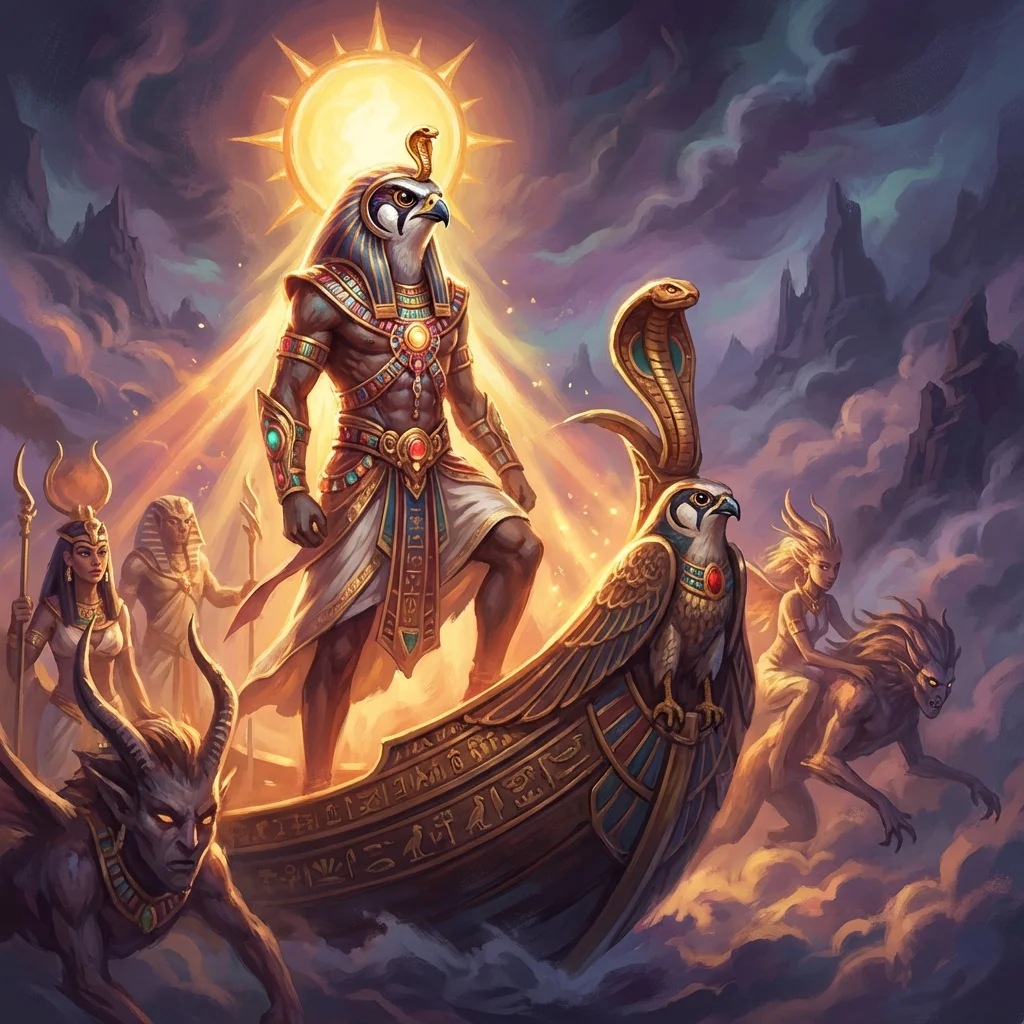
Ra
Ra is a Deity — the solar sovereign of the Nile lands, often sighted as a falcon-headed figure crowned with a blazing solar disk. Seen through the eye of a field naturalist, Ra arrives as a line of pure light that makes sand and stone sing: gold dust on the wind, linen bleached to brilliance, the dark lacquer of a ritual barque glinting with reflected fire. Smell: sharp ozone threaded with resin and frankincense, with a faint tang of warmed papyrus. Sound: a distant, steady hum like a chorus of reeds and bronze, punctuated by the measured beat of ceremonial drums. Temperature: overwhelming, sun-forged heat — air that shimmers and sharpens, shadows that retreat and harden at his passing.