The Morrigan: The Phantom Queen
The Triple Goddess of War
The Morrígan ("Great Queen" or "Phantom Queen") is the most terrifying deity in the Irish Celtic pantheon. She is a shapeshifter and a prophetess of doom. She is often viewed as a triple goddess, consisting of three sisters who represent different aspects of war:
- Badb: To incite panic and confusion.
- Macha: The sovereignty of the land and the horses.
- Nemain (or Anand): Furious frenzy and havoc. She does not fight with swords. She fights with fear.
The Washer at the Ford
Her most famous manifestation is the Bean Nighe (Washerwoman). A warrior riding to battle might see an old hag or a young woman kneeling by a river, washing blood-stained clothes. Upon closer inspection, the warrior realizes the clothes are his own. This is a death warrant. It is the Morrigan telling you that you will not return.
The Battle Crow
She haunts the battlefield in the form of a crow or raven (Badb Catha). From the sky, she shrieks to demoralize armies and encourage her favorites. After the battle, she descends to peck the eyes of the dead. The presence of crows before a fight was always seen as a sign that the Morrigan was watching.
Cú Chulainn's Doom
The legendary hero Cú Chulainn rejected her love. In revenge, she hounded him throughout his life. When he was finally mortally wounded, he tied himself to a standing stone so he could die on his feet, facing his enemies. The opposing army was afraid to approach him until a crow landed on his shoulder. It was the Morrigan, claiming him at last.
The Final Warning
War is not glorious; it is a buffet for the crows. The Morrigan stands as a reminder that fate is impartial and cruel. If you hear a clear, mocking laugh from a raven on your roof, do not ignore it. The Queen is choosing her next meal, and she is looking at you, so pay respect, or pay with your eyes.
Featured Creature Profile
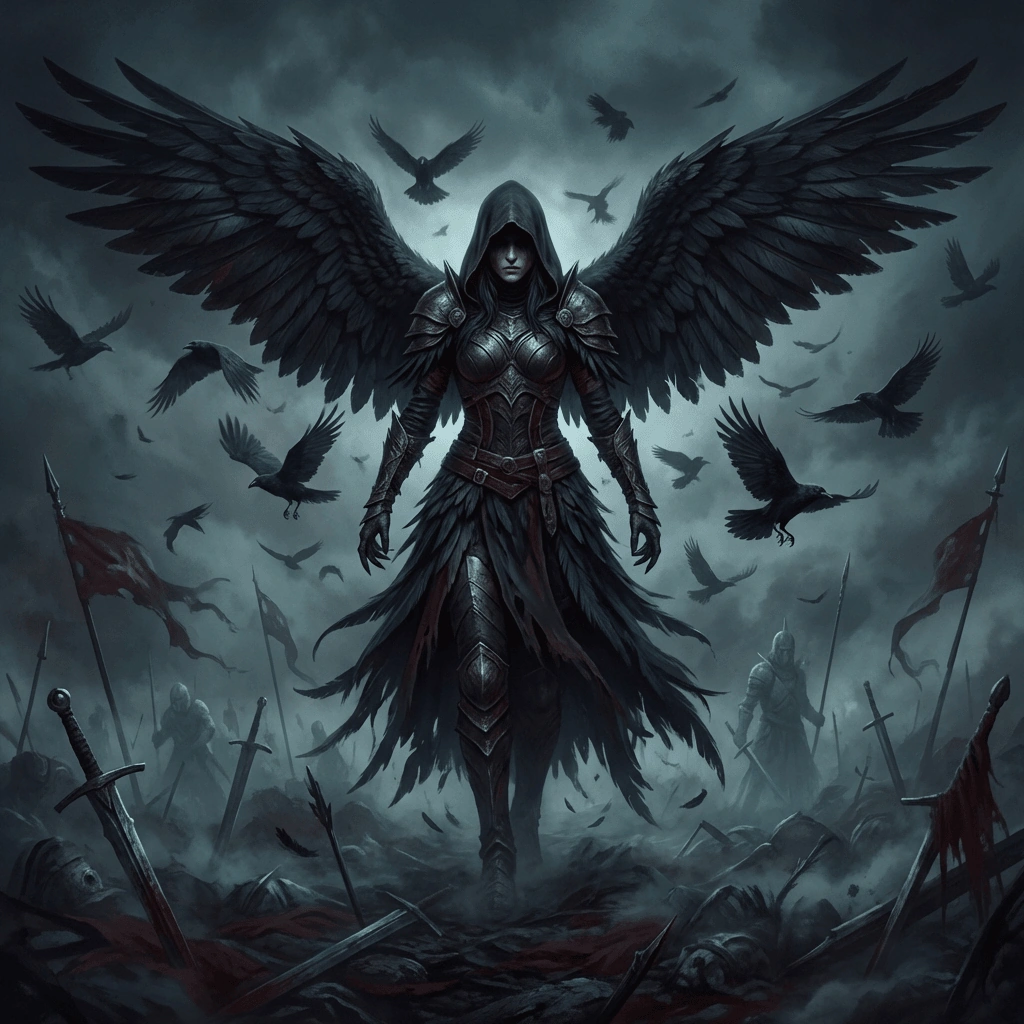
Morrígan
Morrígan is a Deity most often sighted along liminal places—ridge-lines, crossroads, and the margins of battle—where she manifests as a solitary Raven, a trio of crows, or a shift of dark wind. Smell: wet peat and cold iron, carrying the faint tang of rain on old leather. Sound: the measured beat of wings close by, a distant, metallic ring like struck helmets, and occasionally a single hollow cry repeated three times. Temperature: a keen, encroaching cold as if the air itself has been sharpened. Field notes mark her presence with an uncanny stillness that precedes change rather than with overt violence.