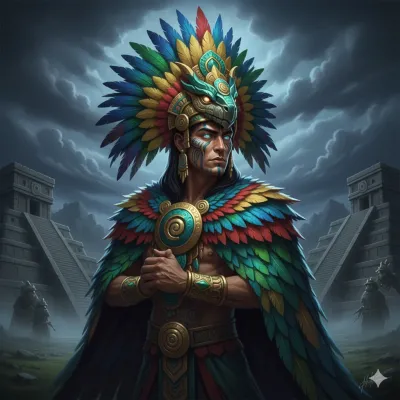
Quetzalcoatl in Pop Culture
The Feathered Serpent Deity of Wind, Dawn, and Wisdom
The Evolution of Quetzalcoatl in Modern Media
The iconic Feathered Serpent of Mesoamerica: creator of humanity, master of wind and learning, and patron of priests. Reimagined in pop culture as a magnificent dragon-serpent soaring through storm clouds.
Key Media Tropes & Misconceptions
- Serpentine body draped in iridescent emerald quetzal feathers
- Deity of the morning star (Venus), wind, and agricultural fertility
- Refusal of human blood sacrifice in indigenous legends
- Draconic flying deity in anime and gaming summons
Ancient Myth vs. Hollywood & Gaming
In traditional Nahuatl / Aztec lore, Quetzalcoatl was revered or feared as a true deity (feathered serpent), representing natural forces, moral boundaries, and environmental taboos of its homeland.
Modern gaming and pop culture frequently adapt Quetzalcoatl into combat encounters, boss battles, or creature features, amplifying its physical menace while streamlining ancient rituals.
While popular media often treats Quetzalcoatl as a generic monster to be slain with weapons, ancient folklore taught that it could only be appeased, warded off with sacred taboos, or avoided entirely.
Verified Media Appearances
Explore every notable video game, movie, television, and literary depiction.
Final Fantasy VIII
Square Enix
Quezacotl is the starter Guardian Force (GF) in FFVIII, dealing devastating lightning storm damage.
Fate/Grand Order
Type-Moon
Quetzalcoatl appears as a cheerful, golden-haired Rider-class Goddess who loves Mexican Lucha Libre wrestling and righteous justice.
Miss Kobayashi's Dragon Maid
Kyoto Animation
Lucoa (Quetzalcoatl) is an ex-goddess dragon who lost her divine status and lives peacefully in modern Japan.
Ark: Survival Evolved
Studio Wildcard
The Quetzalcoatlus is the colossal flying pterosaur named after the Aztec deity, capable of carrying entire platform bases.
Frequently Asked Questions
Is the dinosaur Quetzalcoatlus named after Quetzalcoatl?
Yes! Paleontologists named Quetzalcoatlus (one of the largest known flying pterosaurs with a 36-foot wingspan) after the Aztec feathered serpent god Quetzalcoatl.
Was Quetzalcoatl worshipped with human sacrifice?
In Toltec and Aztec mythology, Quetzalcoatl stood out as a benevolent deity who specifically opposed human sacrifice, asking only for offerings of jade, incense, butterflies, and flowers.
Discover the True Myth Behind Quetzalcoatl
Dive deeper into traditional folklore with our complete codex entry, including authentic origin myths, survival advice, weaknesses, and powers.