The Wendigo: The Hunger of the Winter Woods
The Whispering Trees
A Page from the Beastkeeper’s Journal
The cold up here in the Canadian wilderness doesn't just freeze your skin; it freezes your thoughts. I’ve been huddled in this hunting cabin for three days. The generator died yesterday, and the firewood is running dangerously low. But that isn't why I haven't gone outside.
I haven't gone outside because last night, I heard someone calling my name from the tree line.
It sounded exactly like my brother. My brother, who has been dead for ten years. The voice was desperate, pleading for help in the snow. I almost opened the door before I remembered the folklore. I remembered what hunts in the deep winter when hunger sets in.
Origins of the Starvation Curse
The Wendigo is a terrifying entity from the folklore of the Algonquin-speaking peoples of North America. It is a spirit of winter, famine, and extreme starvation. But more than a monster, the Wendigo is a curse.
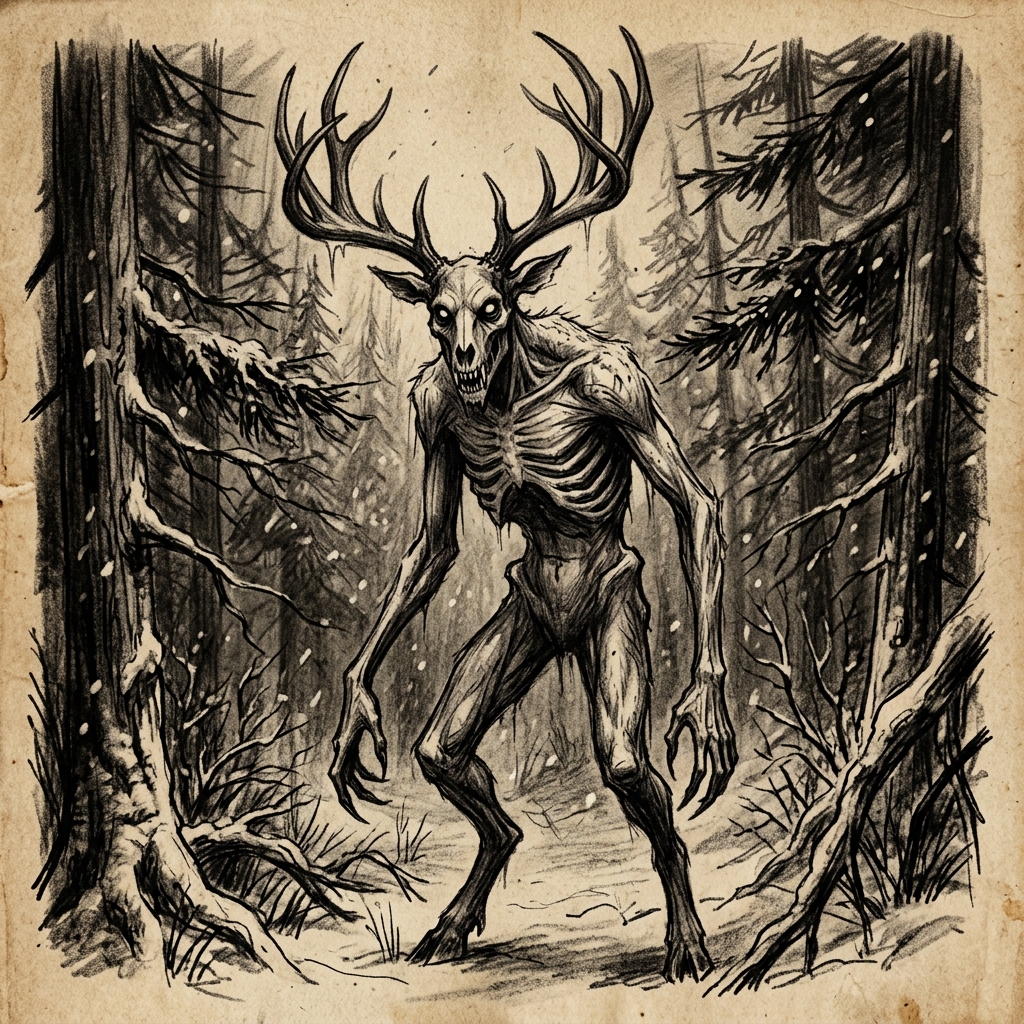
It is born when a human, driven mad by the desperate isolation and starvation of a harsh winter, resorts to cannibalism to survive. Once human flesh is consumed, the person is transformed into a Wendigo—a monstrous, gaunt giant with glowing eyes, matted fur, and a hunger that can never be satiated. No matter how much it eats, it grows in proportion to its meal, forever starving.
Journal Note:
It is the physical manifestation of greed and taboo. The Wendigo isn't just a predator; it is a warning about losing our humanity when survival pushes us to the absolute brink.
Abilities and Psychological Terror
The Wendigo is described as impossibly thin, its skin pulled tight over its bones, smelling of decay and death. It is incredibly fast and strong, completely adapted to the blizzards and ice of the northern woods.
But its most terrifying weapon is psychological. The Wendigo can mimic human voices flawlessly. It uses the voices of loved ones or cries for help to lure unwary travelers out of their safe shelters and into the frozen dark. It inflicts a condition known as "Wendigo psychosis," where the victim begins to experience an overwhelming, irrational desire to consume human flesh, driving them mad before the monster ever touches them.
The Hunter's Folly
An old trapper once told me a story of two hunters who got snowed in during a freak blizzard. After weeks without food, paranoia set in. One hunter swore he heard a rescue party outside and rushed out into the storm. He never returned.
Days later, the remaining hunter heard a scratching at the door. He heard his friend's voice, begging to be let in, claiming he had found food. When the hunter opened the door, it wasn't his friend standing there. It was a towering, emaciated horror wearing his friend's torn coat.
Journal Note:
The voice I heard last night... it knew exactly what inflection to use. It knows my memories. It is hunting my mind before it hunts my body.
A Final Reflection
I am writing this by the fading light of a single lantern. The wind is picking up again, howling against the cabin walls. But beneath the wind, I can hear the crunch of footsteps in the snow, slowly circling the cabin.
I won't open the door. I will let the fire die and endure the freezing cold, because freezing to death is a mercy compared to becoming the thing that waits outside.
Did You Know?
"Wendigo psychosis" is a recognized psychiatric term used to describe a culture-bound syndrome characterized by an intense craving for human flesh and the fear of becoming a cannibal.
<div className="bg-surface border border-gray-700 rounded-lg p-6 my-8 text-center shadow-lg"> <h3 className="text-xl font-bold text-white mb-2">Want the Wendigo on your tabletop?</h3> <p className="text-content-dim mb-4">Support our expedition by grabbing the exclusive 3D printable STL figurine.</p> <a href="#fake-door-stl-wendigo" className="inline-block bg-blue-600 hover:bg-blue-500 text-white font-bold py-2 px-6 rounded-full transition-colors"> Download 3D Printable STL (Free) </a> </div>