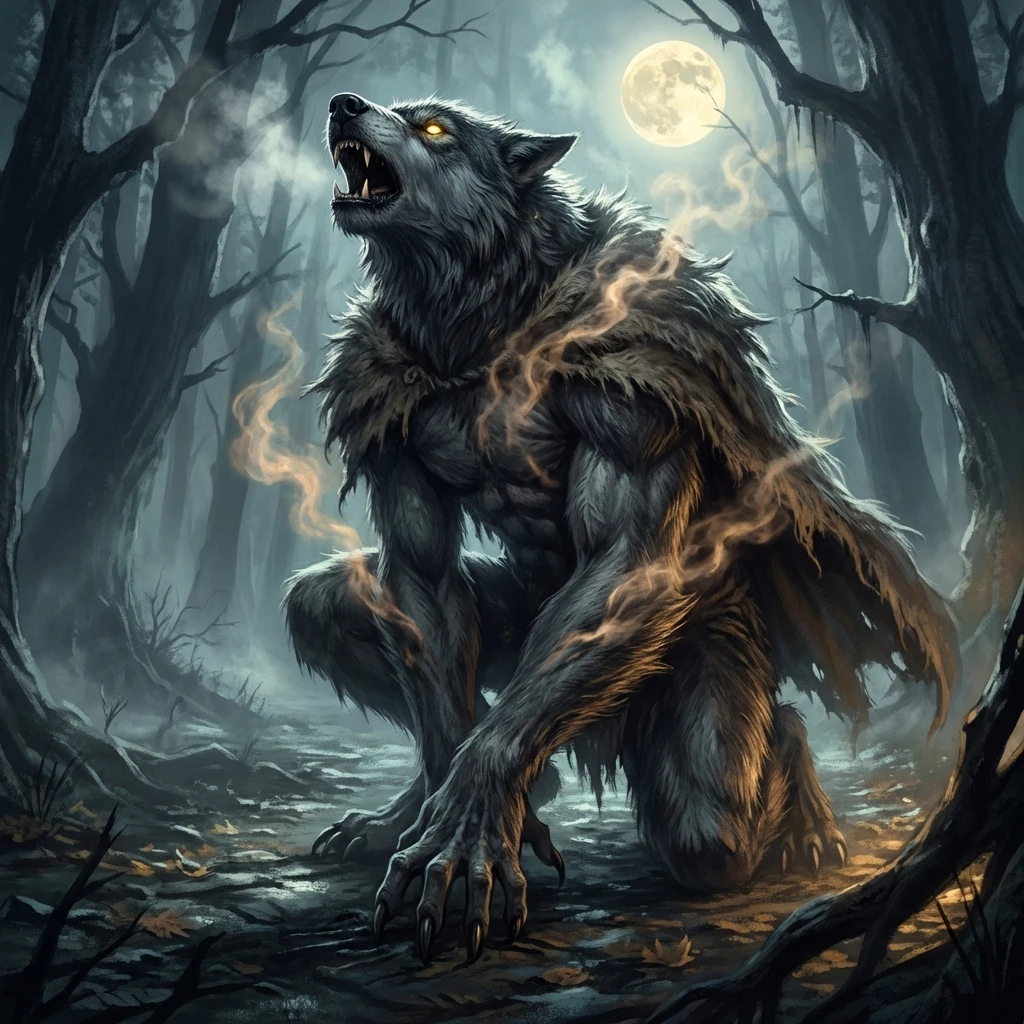
Werewolf
Often found in European, Werewolf is a monster lycanthrope of lycanthropy.
Werewolf Lore & Origins
Werewolf Encounter Protocols & Field Notes
- Mismatched tracks: human heel impressions interspersed with elongated, clawed paw prints and a bounding gait; a lingering metallic/earthy scent.
- avoidance: Avoid travel alone at night, especially near forests and ruins; keep to well-lit routes and populated areas, travel in groups, secure all doors and livestock, and never pursue sighting—retreat slowly and quietly.
- defense: Do not engage in close combat. Create barriers (doors, fire, light) and retreat to secure shelter. Loud noise and bright flames disrupt approach; historically, silver or iron-touched objects are reported to deter or wound. If forced to confront, use ranged means to buy time and aim to escape rather than to kill—seek local knowledge and backup.
- offering: None reliably appeases a werewolf; deterrence and avoidance are the only consistent strategies.
Werewolf Abilities & Powers
- Lunar TransfigurationUnder the full moon the afflicted undergoes a supernatural metamorphosis into a wolf‑hybrid form, gaining monstrous strength, razor limbs and an overwhelming predatory compulsion.
- Curse TransmissionWounds inflicted by its claws or teeth can pass lycanthropy to humans, creating new afflicted who may later transform under lunar influence.
- Regenerative HideIn hybrid form it heals cuts and broken bones far faster than a human, closing injuries unless treated with silver or sacred means.
- Nocturnal Pack-HowlA long, supernatural howl rallies nearby wolves and unnerves humans, drawing allies and sowing panic across the night woods.
Weaknesses & How to Defeat the Werewolf
- SilverContact with silver (blades, bullets or ornaments) sears flesh and can reliably maim or mortally wound the creature.
- Aconite (Wolfsbane)Ingestion or smoke of aconite (wolfsbane) causes delirium and can prevent or weaken transformations in many folk remedies.
- Consecrated RelicsHoly water, consecrated ground or revered Christian relics often repel or inflict pain upon the werewolf in numerous traditions.
Related Monsters

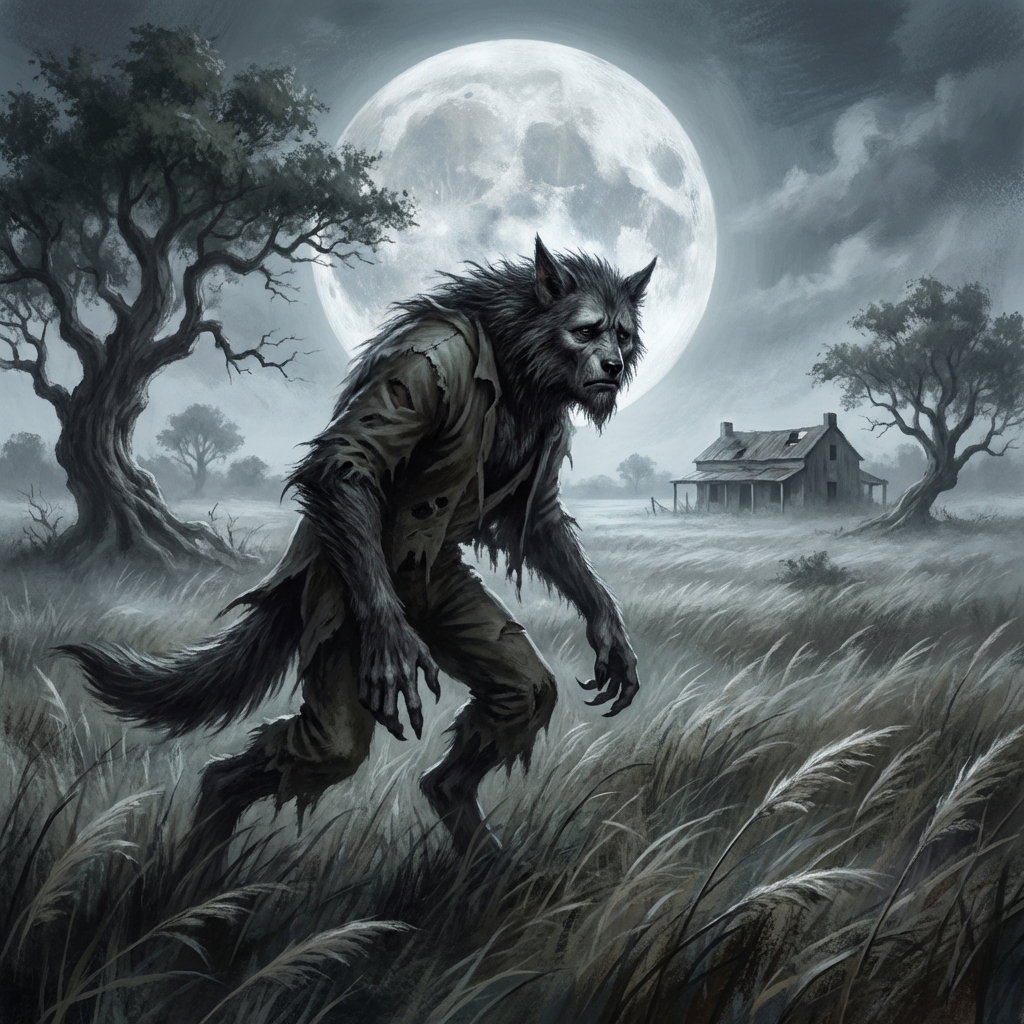


Who Would Win?
Think you know everything about the Werewolf? Test your knowledge in our Battle Matchups simulator to see how it fares against other legendary creatures.
Recommended Reading
Expand your library with these top-rated books on global mythology & folklore

Mythology: Timeless Tales of Gods and Heroes
By Edith HamiltonThe absolute standard for Greek, Roman, and Norse mythology studies. Excellent source for understanding gods and classic monsters.

The Hero with a Thousand Faces
By Joseph CampbellExplores the monomyth (the Hero's Journey) across global folklore and mythic archetypes, outlining why these stories persist.
Affiliate Disclosure: As an Amazon Associate, we earn from qualifying purchases when you buy recommended books through our links.
Want to discover something else?
Fall down the mythic rabbit hole. Click below to discover a completely random creature from our archives.