The Chupacabra: Predator of the Scrublands
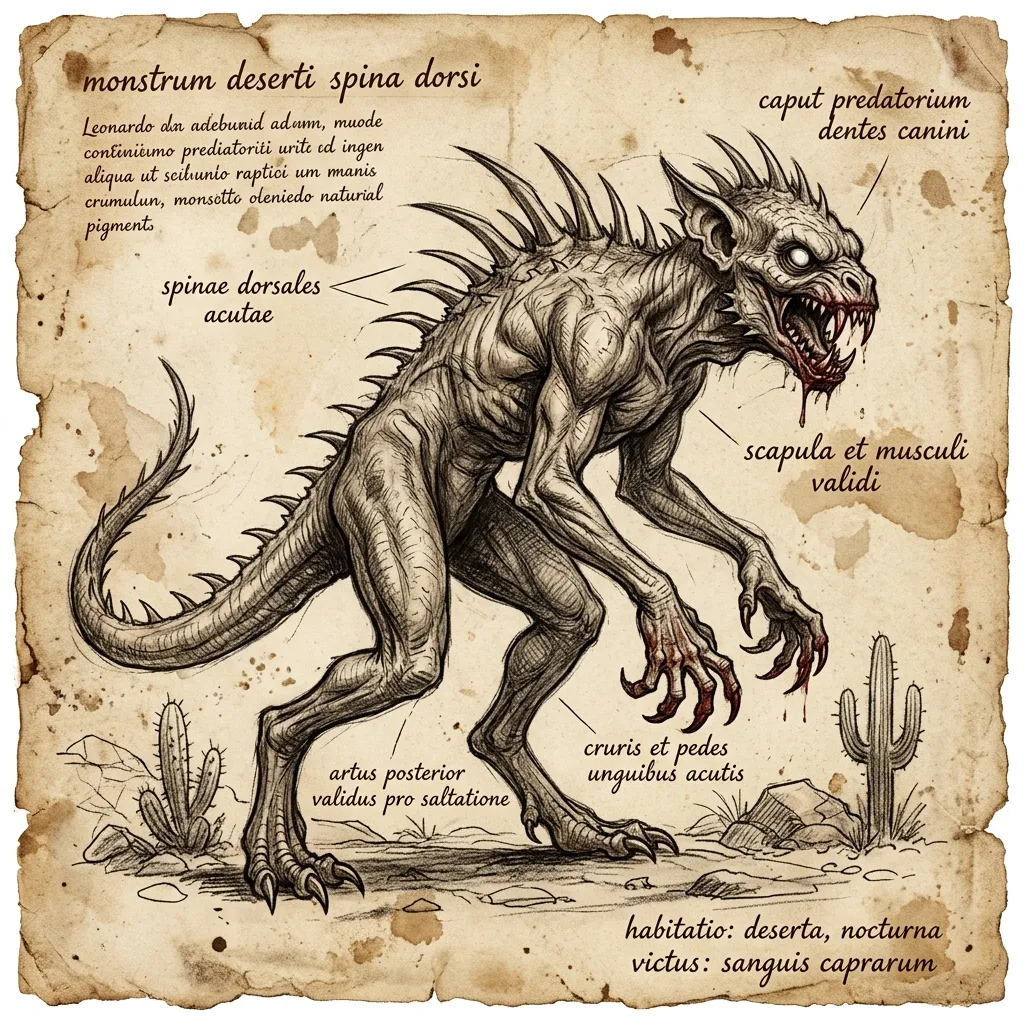
The Silent Kill
A Page from the Beastkeeper’s Journal
The heat radiating off the Puerto Rican scrubland was still oppressive, even hours after the sun had set. The rancher led me by flashlight to the edge of the goat pen. There were no signs of a struggle. The fencing was intact, the gate was locked, and the other goats were huddled in the corner, trembling in absolute silence.
In the center of the dust lay three carcasses.
They weren't torn apart by a coyote or dragged away by a wild dog. They were completely intact, save for three distinct, circular puncture wounds on their necks. When I rolled one of the goats over, the body was unnaturally stiff and impossibly light. It had been completely drained of blood.
Origins of the Goat-Sucker
The El Chupacabra (literally translated as "goat-sucker") is a relatively recent addition to the pantheon of cryptids, but its legend has spread across the Americas like wildfire. The first reported attacks occurred in Puerto Rico in 1995, where farmers discovered dozens of farm animals—goats, sheep, and chickens—dead and drained of blood.
The original descriptions from Puerto Rican witnesses depicted a creature that looked like a bipedal alien. It was about three to four feet tall, with large glowing red eyes, grey reptilian skin, and a row of sharp quills or spines running down its back.
Journal Note:
It doesn't hunt for meat; it hunts for fluid. It’s an anomaly of biology. A vampire of the modern age, stalking the edges of agricultural borders.
Abilities and the Scent of Sulfur
The Chupacabra is famously elusive. It strikes with surgical precision, leaving almost no blood spilled on the ground. Witnesses often report a distinct, suffocating smell of sulfur or battery acid lingering in the air after an attack.
While the original Puerto Rican Chupacabra was described as bipedal and reptilian, sightings that later spread to Mexico and the American Southwest described a very different creature: a hairless, quadrupedal beast resembling a sickly, monstrous coyote or wild dog. Many biologists believe these mainland sightings are simply wild canines suffering from severe sarcoptic mange, which causes hair loss and a monstrous appearance.
The Canóvanas Flap
During the height of the panic in the municipality of Canóvanas in 1995, the local mayor organized massive hunting parties to track down the beast. Armed townspeople scoured the jungle at night with machetes and rifles, following the overwhelming stench of sulfur.
One witness claimed the creature leaped over a 20-foot fence from a standstill, escaping into the dense brush before anyone could fire a shot. Despite hundreds of sightings and thousands of dead animals, the hunting parties never found a body.
Journal Note:
Whether it's an undiscovered species, a government experiment, or mass hysteria, the result is the same: fear. The Chupacabra represents our helplessness to protect our livelihood in the dark.
A Final Reflection
I knelt in the dust, examining the puncture wounds. As the rancher nervously scanned the tree line with his flashlight, the beam briefly caught something moving in the mesquite bushes. Two reflective eyes flashed red, and the distinct smell of sulfur drifted over the pen on the hot night breeze. I stood up slowly, gripping my rifle, knowing that whatever was out there in the dark was perfectly adapted to this brutal environment—and we were just visitors.
Did You Know?
The description of the original bipedal Chupacabra in 1995 bears a striking resemblance to the alien creature from the sci-fi horror movie Species, which was released in Puerto Rico just weeks before the first major sightings were reported.
<div className="bg-surface border border-gray-700 rounded-lg p-6 my-8 text-center shadow-lg"> <h3 className="text-xl font-bold text-white mb-2">Want the Chupacabra on your tabletop?</h3> <p className="text-content-dim mb-4">Support our expedition by grabbing the exclusive 3D printable STL figurine.</p> <a href="#fake-door-stl-chupacabra" className="inline-block bg-blue-600 hover:bg-blue-500 text-white font-bold py-2 px-6 rounded-full transition-colors"> Download 3D Printable STL (Free) </a> </div>